PVA filament
Polyvinyl alcohol
PVA is a water-soluble support material. You print it alongside a main material on a multi-material or dual-extruder printer, then dissolve it away in water to leave clean surfaces and shapes that would be impossible to support otherwise.
22 PVA filaments from 15 brands, in 24 colours.
Typical settings
Median values across all PVA filaments. Always check the maker's recommendations for a specific filament.
- Nozzle
- 180–210 °C
- Bed
- 50–60 °C
- Density
- 1.23 g/cm³
- Max drying temperature
- 55 °C
Diameters: 1.75 mm (24 colours), 2.85 mm (3 colours)
Colours
Popular PVA filaments
Browse all 22-
2 colours
Bambu Lab
Support for PLA/PETG
-
2 colours
FormFutura
PVA
-
1 colour
3DXTech
PVA
-
1 colour
Bambu Lab
Support for ABS
-
1 colour
Bambu Lab
Support for PA/PET
-
1 colour
Bambu Lab
Support for PLA
-
1 colour
Bambu Lab
PVA
-
1 colour
eSUN 3D
PVA
-
1 colour
Gizmo Dorks
PVA
-
1 colour
Paramount 3D
PVA
-
1 colour
Polymaker
PVA PolyDissolve S1
-
1 colour
Polymaker
PVA PolySupport for PA12
-
1 colour
Polymaker
PolySupport for PLA
-
1 colour
Polymaker
PVA
-
1 colour
PrimaCreator
Primaselect PVA
-
1 colour
PrimaSelect
PVA+
-
1 colour
ROSA3D Filaments
PVA 2
-
1 colour
SainSmart
PVA
-
1 colour
SMART MATERIALS 3D
PVA
-
1 colour
Snapmaker
PVA
-
1 colour
SUNLU
PVA
-
1 colour
Tectonic 3D
PVA
Top PVA brands
-
 Bambu Lab
5 product lines
-
 Polymaker
4 product lines
-
 3DXTech
1 product line
-
 eSUN 3D
1 product line
-
 FormFutura
1 product line
-
 Gizmo Dorks
1 product line
-
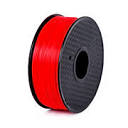 Paramount 3D
1 product line
-
 PrimaCreator
1 product line
-
 PrimaSelect
1 product line
-
 ROSA3D Filaments
1 product line
-
 SainSmart
1 product line
-
 SMART MATERIALS 3D
1 product line
About PVA
Properties
- Dissolves in water, especially warm water, leaving no support marks.
- Very sensitive to moisture: it absorbs water from the air quickly and becomes unprintable if left out.
- Pairs best with PLA, which prints at similar temperatures. Some grades also work with PETG.
- Not used for the parts themselves.
Good for
- Supports for complex overhangs, internal cavities and moving parts printed in place
- Prints where support scars would ruin the surface
Less suited to
- High-temperature materials like ABS, ASA or PC (look at HIPS or specialist supports instead)
- Single-extruder printers without a multi-material system
Printing tips
- Nozzle around 180–220 °C, matched to your main material; use PLA-like bed temperatures.
- Keep it dry at all times. Dry before use (often around 45–55 °C) and print from a sealed dry box.
- Use it only for the support interface layers to save filament, if your slicer allows.
- Dissolve supports in warm, moving water, and change the water as it thickens.
PVA questions
Can I use PVA with a single-nozzle printer?
Only with a multi-material system that swaps filaments automatically. On its own, a single-extruder printer cannot print the support and the part in different materials.
What filament works with PVA supports?
How long does PVA take to dissolve?
From a few hours to overnight, depending on the amount, water temperature and how much the water moves. Warm, stirred water is much faster.
Why is my PVA snapping or stringing?
It has almost certainly absorbed moisture. Dry it and keep it in a sealed dry box while printing.
What is the difference between PVA and BVOH?
Both are water-soluble supports. BVOH generally dissolves faster and is a little less fussy about moisture, but it costs more.